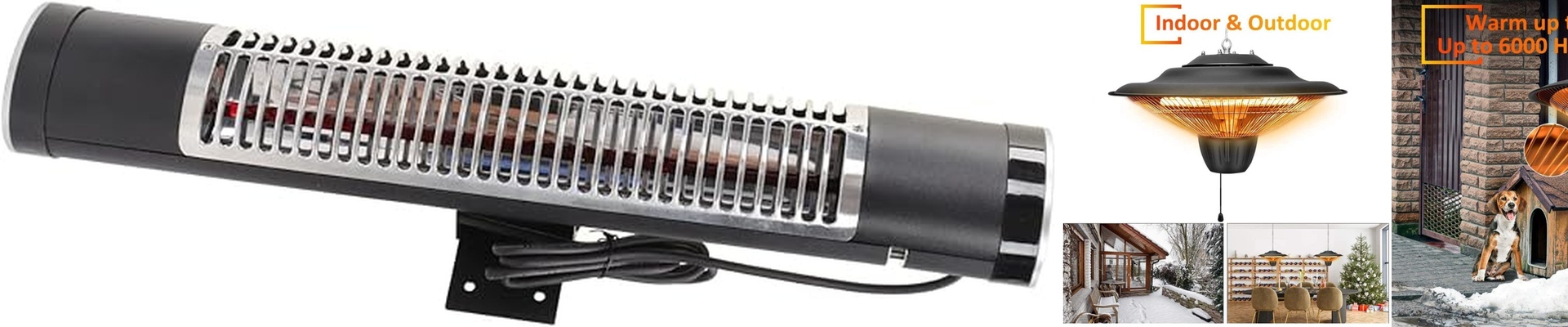


Why Your Bathroom heater Shouldn’t Blind You
Ever stepped into a bathroom with one of those heat lamps and felt like you were staring directly into the sun? Most of these heaters use short-wave infrared to get you warm fast. The problem is the light that comes with it. Standard halogen tubes blast out a harsh, white glare that’s not just annoying—it can actually be hard on the eyes. It’s especially risky for babies, whose eyes are still developing and way more sensitive than ours. We figured there has to be a better way.
The trick with the glass
We didn’t just try to “dim” the light. That doesn’t really work. Instead, we use special quartz coatings on the glass. Think of it like a filter. It blocks the aggressive, high-energy light that hurts your eyes but lets the actual heat—the mid and long-wave infrared—slide right through. You still get that cozy, dry heat that kills the chill in a damp bathroom, but the light stays as a soft, low-intensity glow. Much easier on the eyes.
Keeping things cool (and safe)
It’s all about a balancing act. If the filament inside the lamp gets too hot, it starts emitting “blue light,” which is exactly what we’re trying to avoid. We spent a lot of time tweaking the shape of the tungsten filament and using a halogen cycle to keep the glass from turning black. This keeps the heat steady without spiking into those dangerous UV ranges. And since bathrooms are basically steam rooms, the housing has to be tough. We use reflectors that don’t corrode and push the heat straight down. This means less wasted energy and a ceiling fixture that doesn’t overheat.
The trade-off
Now, here’s the honest part: filtering out that light costs a little bit of efficiency. Because the coating reflects a tiny bit of heat back into the tube, you lose a small percentage of total power. If you compare it to a raw, uncoated industrial lamp, the raw heat output is slightly lower. But let’s be real. In a bathroom, you aren’t trying to melt steel; you’re trying to keep a toddler warm while you dry them off. Safety and comfort win every time. Just a quick tip: make sure your wiring is up to the task to handle that initial surge when you first flip the switch.