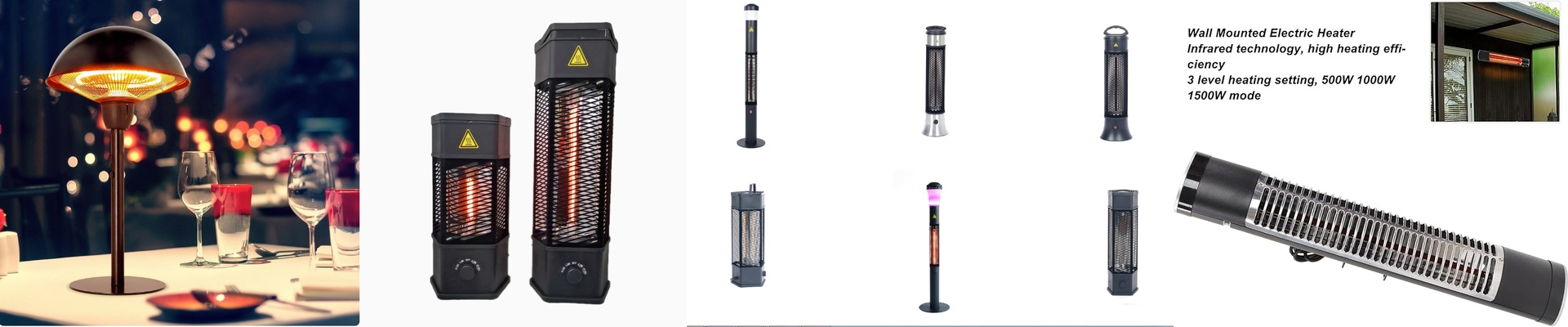
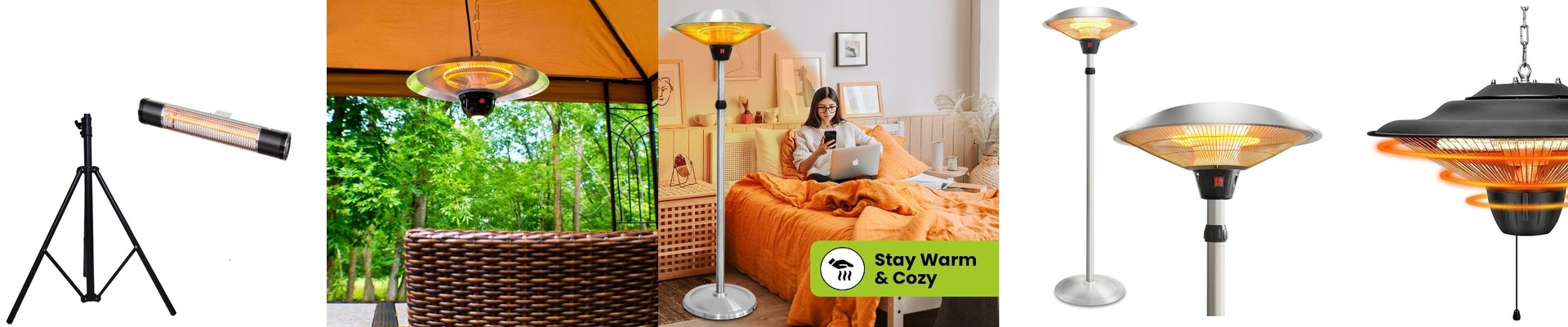

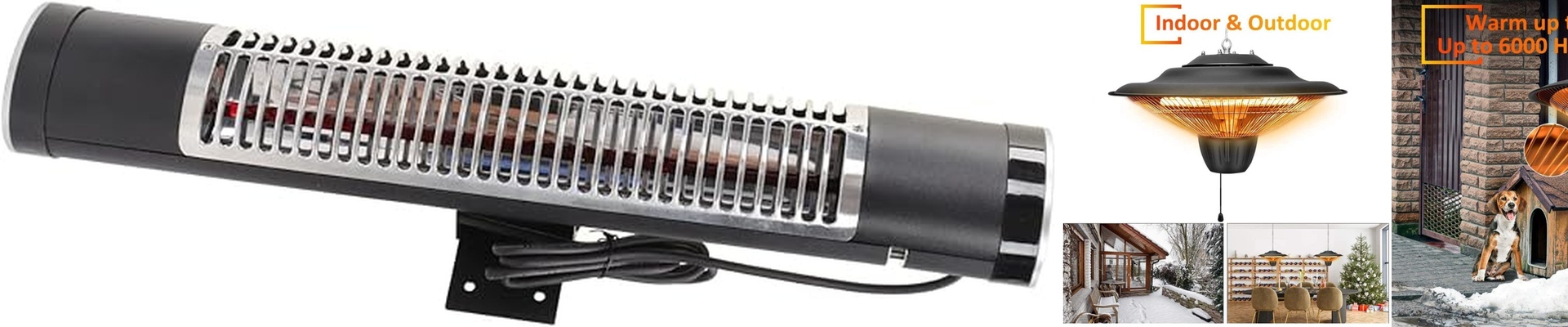
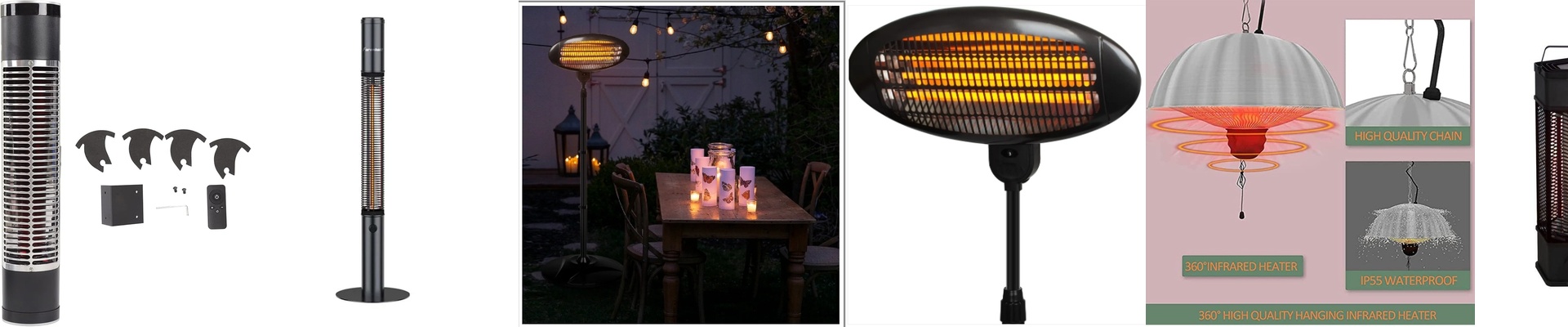
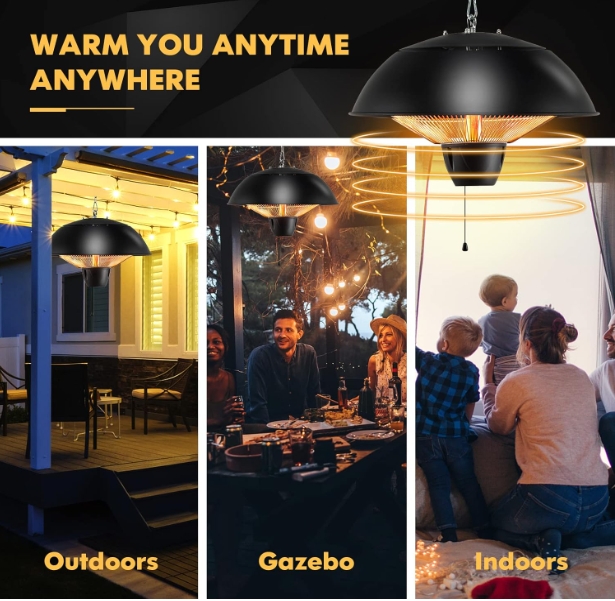
Off-grid living is great—until the sun goes down and the cold starts creeping in. When you’re off the grid, you can’t run a heater that pulls power like a thirsty beast. You need warmth that plays nice with your battery bank. That’s where a freestanding infrared heater really earns its keep.
What matters under the hood
We built this freestanding infrared heater around a carbon fiber element and a quartz tube. We chose those because they respond fast and turn electricity into radiant heat efficiently. You feel that warmth directly—sun-like, hitting people and objects first, not the air. It puts out 1,500 W on high and 750 W on low, runs on standard 120 V, and sits on a stable base with tip-over protection. The adjustable thermostat keeps the space from overshooting, and the sealed build is IP34—protected against dust and splashing water—so it’s right at home on covered patios and in sheltered workshops.
Why it plays well with solar
Hooked up to a solar photovoltaic system, this electric infrared heater turns your battery capacity into comfort, not waste. Radiant heat warms you directly, so you feel cozy even when the air temperature is lower—meaning you use less stored energy to stay comfortable. It starts instantly, no warm-up lag, and the directional warmth can be aimed right where people gather. For off-grid homes, that translates to fewer deep discharge cycles, quieter evenings, and a living space that stays livable when the weather turns.
The practical details
Solar setups vary, so sizing matters. Match the heater to your inverter and wiring, and make sure your battery bank can handle 1,500 W without dipping into the red too often. For best results, run the unit in well-ventilated enclosed spaces or under cover, and keep the clearances clear. Infrared warmth feels strong, but it won’t heat the entire air volume like a convection heater. In very cold rooms, layer up—or pair it with a small circulating fan to move that warmed air around.