
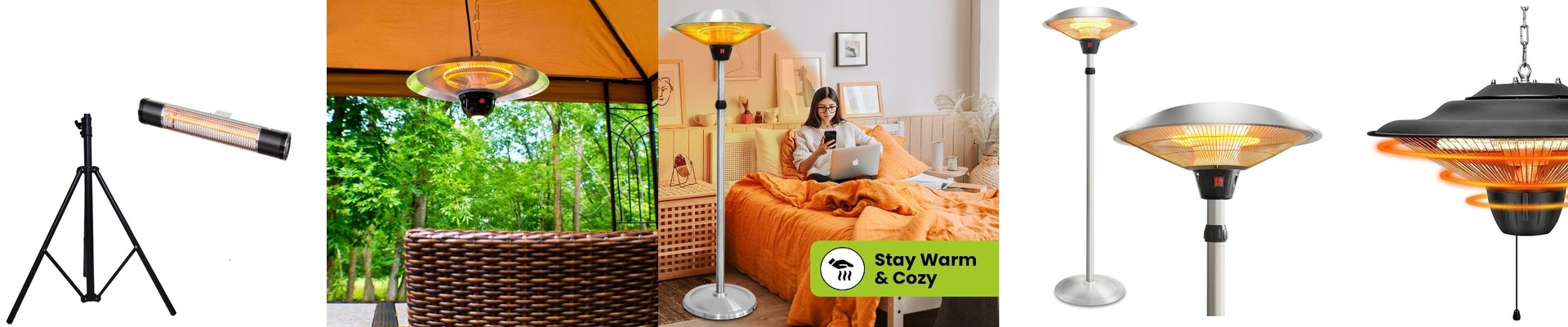
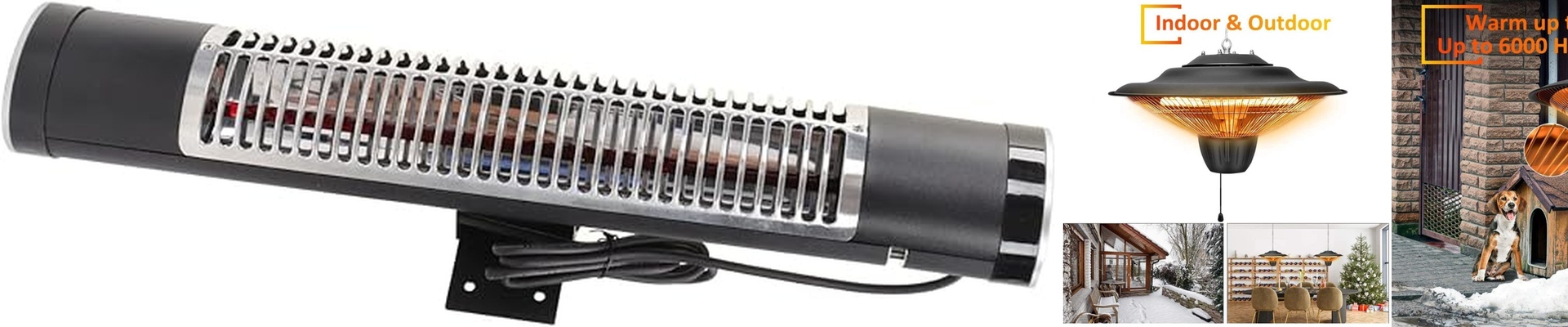
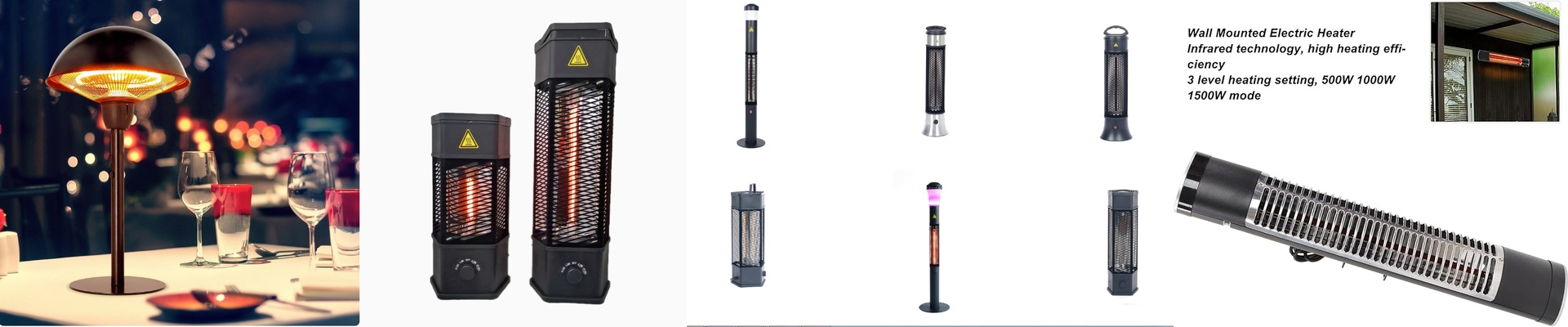
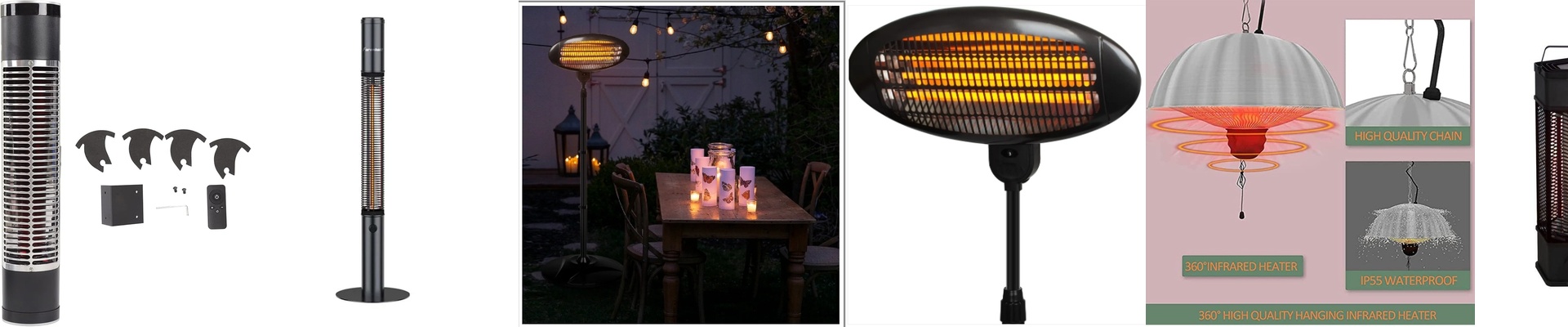

When evening settles on the patio, the issue isn’t just the temperature—it’s how the cold works its way into your joints and steals your momentum. A noisy heater just adds to the distraction. An infrared heater, on the other hand, does something different. It delivers warmth the way the sun does: direct, immediate, and quiet.
What matters, technically
Infrared heaters use a radiant element—usually a carbon fiber element or a quartz tube—to emit infrared warmth. That heat travels through the air and warms people and surfaces directly. You feel it within seconds, without waiting for the whole space to “heat up.” Most models run at 120V and are built as quiet space heaters because there’s no forced-air fan. Heat transfer happens through radiation, so it’s silent. The result is a steady, even warmth that doesn’t cycle on and off like a blower does.
Why this works out there
When you’re trying to unwind after a long day or stretch an outdoor evening without getting stiff, sun-sense heating matters. Infrared warmth penetrates superficially, helping relax muscles and soothe joint fatigue that builds up from overuse or cold exposure. That comfort can support better circulation, which helps the body recover and keeps you moving comfortably. Because the warmth is directional, you can aim the heater where you sit and get the feeling of standing in sunlight—without the glare.
What to keep in mind
Infrared heating is most effective when it’s aimed at people and the key seating areas, so placement matters. For outdoor use, look for a model with an appropriate IP rating for moisture resistance, and keep the heater protected from direct rain. Most units are plug-in electric heaters, so you need a grounded outlet within reach of the cord. For the best experience, keep the heater at a safe distance and use the included safety features—tip-over protection and a thermostat—to hold steady comfort without overheating.