Stop Throwing Away Your Gazebo Heaters
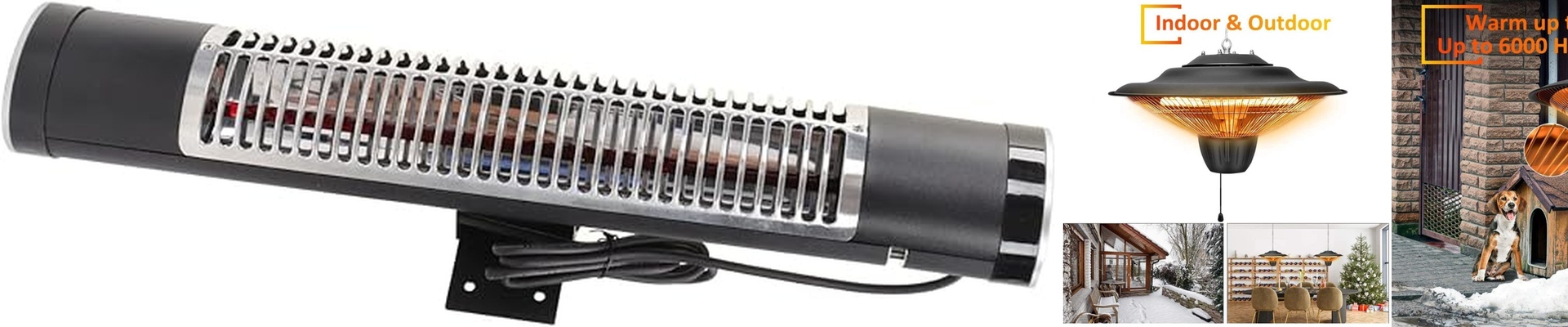
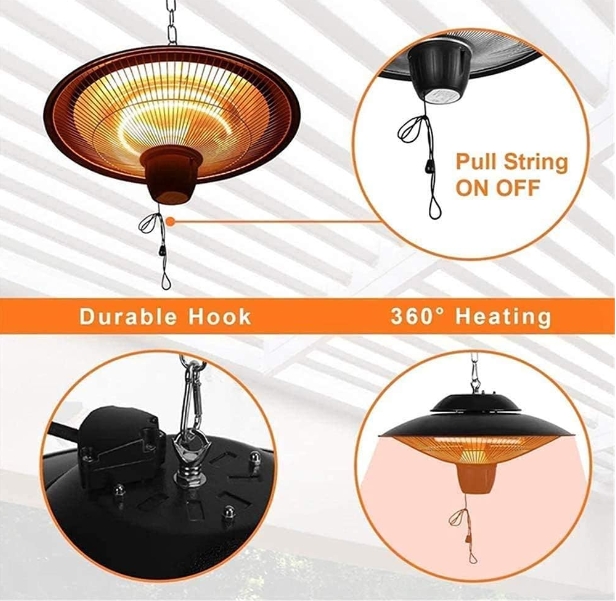
Let’s be honest: most ceiling heaters are basically disposable. You buy one, it keeps you warm for a few seasons, and then a heating element pops. Suddenly, the whole thing is a giant piece of junk headed for the landfill because fixing it is a nightmare. We got tired of that. So, when we built our 1500W infrared modules, we did things differently. We built them to actually last—specifically, we aimed for a five-year window where you can just keep them running.
The “Cartridge” Idea
Getting 1500W of heat without blowing your circuit breaker requires a bit of a balancing act with voltage and current. Most companies just solder everything together in one big clump. We didn’t. We put the heating element into a modular cartridge. Why? Because it means you don’t have to rewire the entire fixture or rip the whole unit off your ceiling just to fix one part. You just slide out the old tube and drop in a new one. It’s that simple.
Let’s Talk About Wear and Tear
Here is the reality: heating elements eventually wear out. Over five years, the quartz can get cloudy or the filament just gets thin. In a cheap, integrated unit, replacing that tube means spending your afternoon with a soldering iron and a dismantled chassis. It’s a headache. With our setup, we use quick-connect interfaces. You go from “broken” to “warm” in minutes, not hours. If you’re running a commercial patio or a fancy backyard setup, you can’t afford to replace ten entire fixtures just because a few lamps gave up. A quick swap in the field solves the problem without the drama.
The Trade-off
Now, look, nothing is perfect. When you go modular, you have more connection points than you would with a hard-wired system. More joints can mean more risks—like voltage drops or arcing—if things aren’t tight. To fix that, we used reinforced clips to keep that 1500W load rock solid. The only “catch” is that you have to make sure the modules are seated perfectly during the first install. Just give them a good click. Once they’re locked in, they handle the constant heating and cooling cycles without budging an inch.