Cutting Carbon in Semi Heating: It’s All About Where the Heat Goes
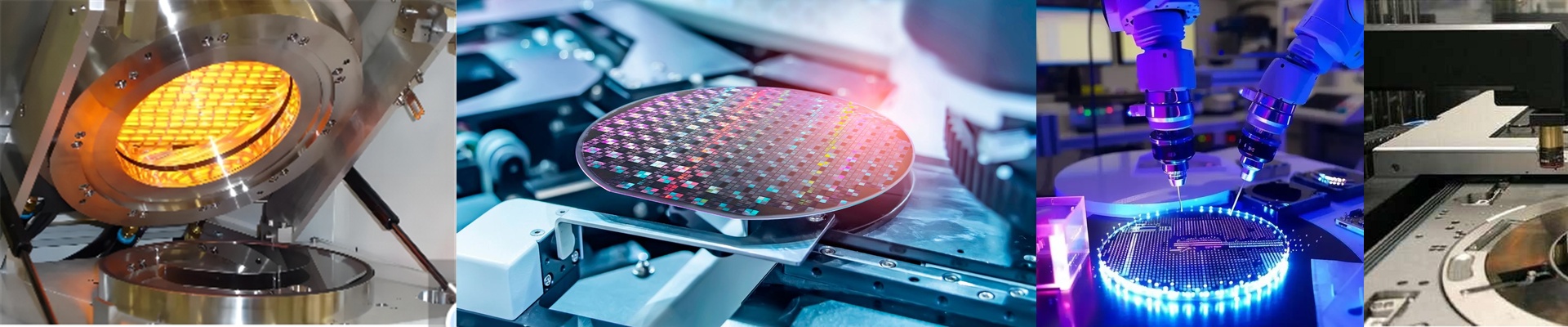
In semiconductor fab, precision is everything. But for a long time, we’ve been relying on old-school resistive heaters that basically act like giant space heaters—they warm up the wafer, sure, but they also waste a ton of energy heating up the entire machine chassis. We’re moving away from that. The shift toward infrared (IR) heating is pretty simple: get the target to the right temperature faster and stop heating the air around it.
Why the Housing Actually Matters
You can have the best heating lamp in the world, but it’s useless without a solid home. We build our housings from high-grade stainless steel because it can take the constant expansion and contraction of thermal cycling without warping. But it’s not just about durability. The housing is your mirror. We carefully calculate the parabolic curve of the steel sheet to bounce that IR radiation straight onto the wafer. When you focus the heat like that, it doesn’t bleed out into the cleanroom. And here is the real win: when your room stays cooler, your HVAC doesn’t have to fight a losing battle to cool it back down. That’s where you actually see the carbon footprint drop.
Stop Wasting Kilowatts
IR is different. It’s radiant heat. Instead of warming up the air and hoping that heat eventually reaches the target, IR goes straight for the gold. We design these systems to kill the “warm-up” window. The less time a tool spends just idling at temperature, the fewer kilowatt-hours you burn per wafer. It’s just leaner.
The Catch: Managing the Heat
Now, there is a trade-off. High-density IR arrays create some intense, localized heat. Even with a stainless steel housing reflecting most of the energy forward, the back of the assembly still takes a beating. You can’t just slide these into an old frame and hope for the best. You’ve got to look at your cooling manifolds and make sure they can handle that concentrated load at the mounting points. Precision is key here. If the housing isn’t fabbed to tight tolerances, you get hot spots. And hot spots mean uneven heating, which usually leads to a bin full of scrapped wafers. That’s why we obsess over weld integrity and the surface finish. It keeps the reflection consistent over thousands of cycles, so you aren’t guessing if your batch is going to come out right.